Service guide
Gas Solenoid Valve Replacement
A valve that buzzes, leaks past the seat, will not latch or has a failed coil is replaced rather than repaired. Same-day replacement keeps a kitchen trading.
- Coil-only replacement where the body and seat are sound
- Like-for-like DN and coil voltage to avoid pressure drop surprises
- Full tightness test, trip test and certificate on completion
Quick answer
Replace a gas solenoid valve when its coil has failed, it lets gas by when closed, it sticks or hums, or it is undersized for the kitchen load. We carry common valve sizes and coils in stock, so most replacements are fitted, tested and recommissioned on the first visit.
- Signs
- No gas, let-by, humming, overheating coil
- In stock
- Interlock panels, gas solenoid valves, air pressure switches
- How to book
- Call 020 8935 5572 or book online, 24/7
Signs a valve needs replacing
- Persistent buzzing or overheating coil
- Valve passes gas when de-energised (failed seat)
- Will not latch after reset despite correct voltage at the terminals
- Body corrosion or damaged threads/flange faces
- Obsolete model with no spares available
What a replacement visit includes
- Isolation, purge and safe removal of the old valve
- New valve fitted with correct orientation and support
- Coil wiring verified against the panel output
- Tightness test, purge, relight and appliance checks
- Functional trip test from fan proving, gas detection and each e-stop
- Written commissioning record for the compliance file
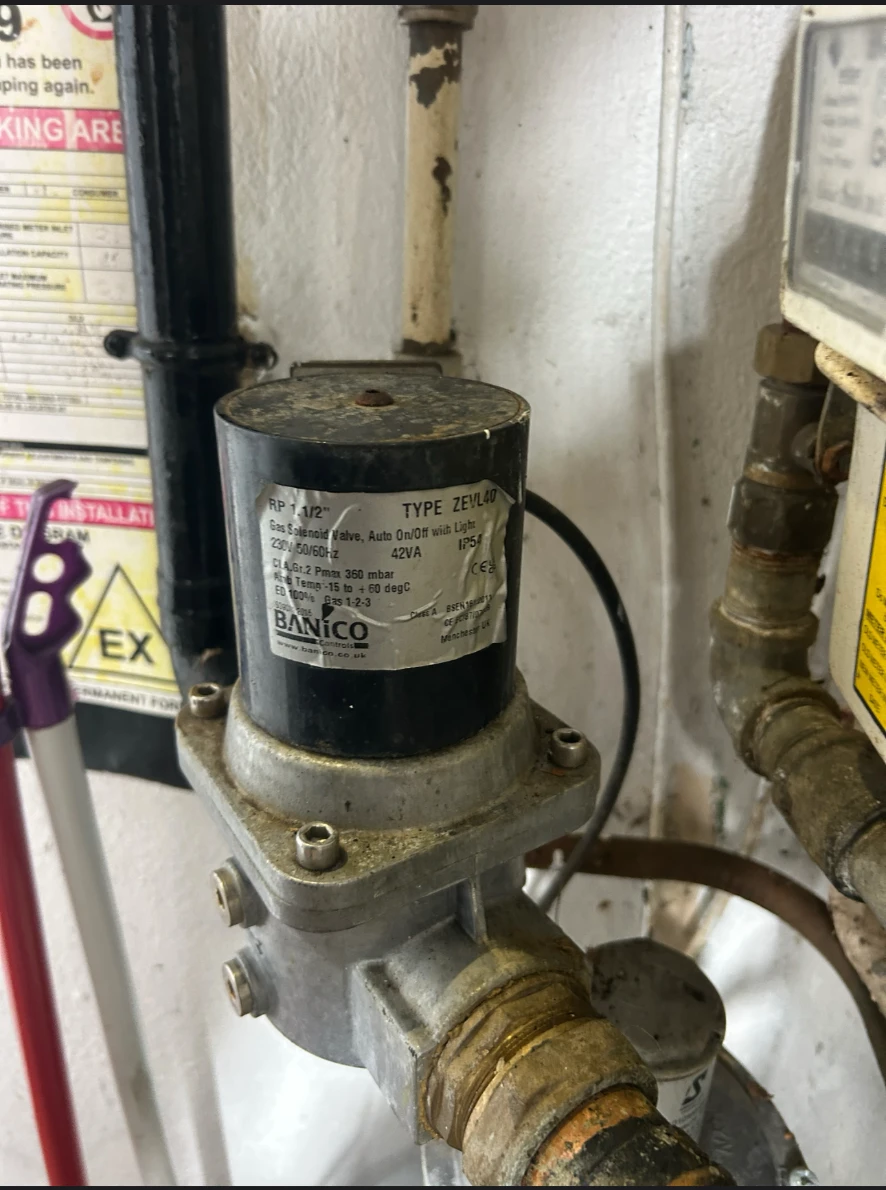
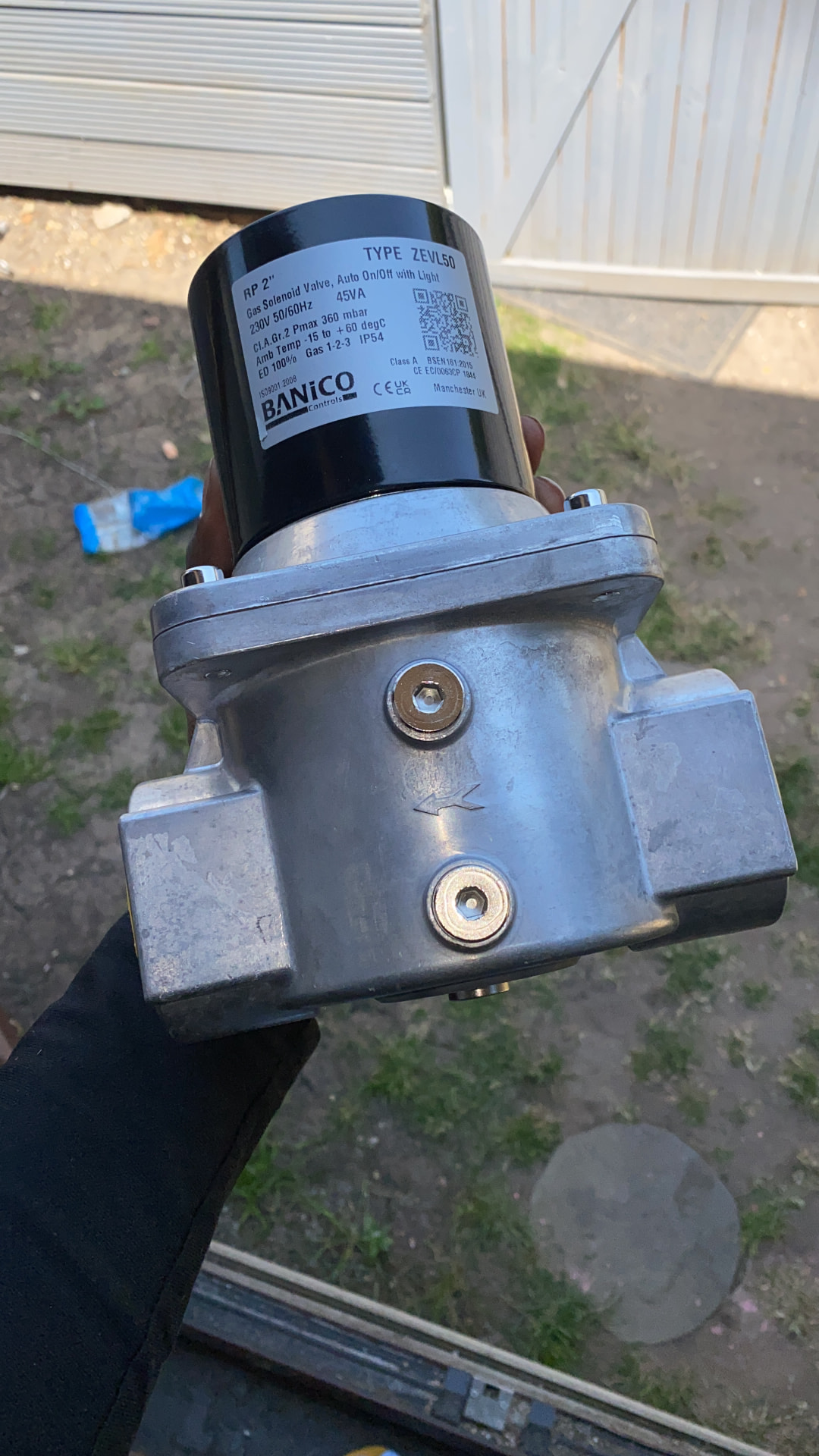
From our engineers' vans
Photos from real jobs — the equipment described on this page, installed and serviced by our engineers.
Frequently asked questions
How do you test a gas solenoid valve?
A Gas Safe engineer checks the coil voltage and resistance, confirms the valve opens and closes on command from the panel, and carries out a let-by and tightness test to prove the valve seals fully when closed.
How does a gas solenoid valve work?
When voltage reaches the coil, a magnetic field lifts the plunger off its seat and gas flows. When the voltage is removed, a spring returns the plunger and seals the valve. Most kitchen valves are normally-closed and 230V AC.
Can only the coil be replaced?
Often yes. If the valve body and seat are sound and spares are available, a coil swap is faster and cheaper than a full valve change.
How long does a replacement take?
Typically two to four hours including isolation, testing and relighting appliances, assuming the valve is accessible.
Related guides
Gas Solenoid Valves
Normally closed automatic shut-off valves and diagnostics.
Solenoid Valve Installation
Orientation, sizing, wiring and tightness testing.
Gas Interlock Systems
Installation, servicing, testing and fault-finding for kitchen ventilation interlocks.
Gas Safety Control Panels
Interlock and proving panels, indicators and diagnostic codes.
Commercial Kitchen Gas Safety
Ventilation interlock, airflow proving and CP42 compliance.
Parts in stock — ready to fit
Held in UK stock and carried on our vans, so most jobs are fixed in one visit.
Replacement gas interlock systems
Complete panels & kits ready to fit
In stock today
Air pressure switches
Fan & gas proving pressure switches
In stock today
Gas solenoid valves
Normally closed safety shut-off valves
In stock today
Quick release gas catering hoses
Commercial ranges, bays & mobile catering
In stock today
Super universal thermocouples
Fits most commercial gas appliances
In stock today
Need a part fitted?
Same-day engineer dispatch with these parts on the van.
Gas Safe Registered
Commercial catering & plant
24/7 UK Response
Same-day emergency dispatch
Vetted Engineers
DBS checked for schools & care
Transparent Pricing
Fixed callout, quoted parts