Pillar guide
Commercial Gas Interlock Systems
A gas interlock system proves that mechanical ventilation is running before it allows gas to reach commercial catering appliances. If extract or make-up air fails, the interlock closes the gas solenoid valve within seconds.
- Required by BS 6173 for commercial kitchens with mechanical ventilation
- Installed, serviced and certified by Gas Safe registered commercial engineers
- Same-day emergency attendance for kitchens shut down by a tripped interlock
System architecture
How a gas interlock works
The interlock controller monitors proof of ventilation from one or more sensing devices — a differential air pressure switch across the extract fan, an air velocity or duct airflow sensor, or a fan current monitoring sensor on the motor supply.
Once ventilation is proven and the gas line has passed its proving sequence, the controller energises the normally closed gas solenoid valve. Remove any of those conditions and the valve de-energises and slams shut.
- Extract fan running and proven
- Make-up (input) air fan running and proven
- Emergency stop button not engaged
- Gas line proving test passed (where a proving panel is fitted)
- No gas detection or CO/CO₂ alarm active
Regulations: BS 6173 and IGEM/UP/19
BS 6173 sets out the installation of gas-fired catering appliances and requires a ventilation interlock where mechanical ventilation serves the appliances. IGEM/UP/19 covers the design and installation of gas safety systems including interlocks, proving and detection in commercial premises.
Gas Safety (Installation and Use) Regulations duties sit with the responsible person: annual inspection, records of commissioning and a documented interlock test at service.
Installation, servicing and commissioning
- Survey: appliance gas rate, ventilation volumes, canopy design, existing pipework and isolation points
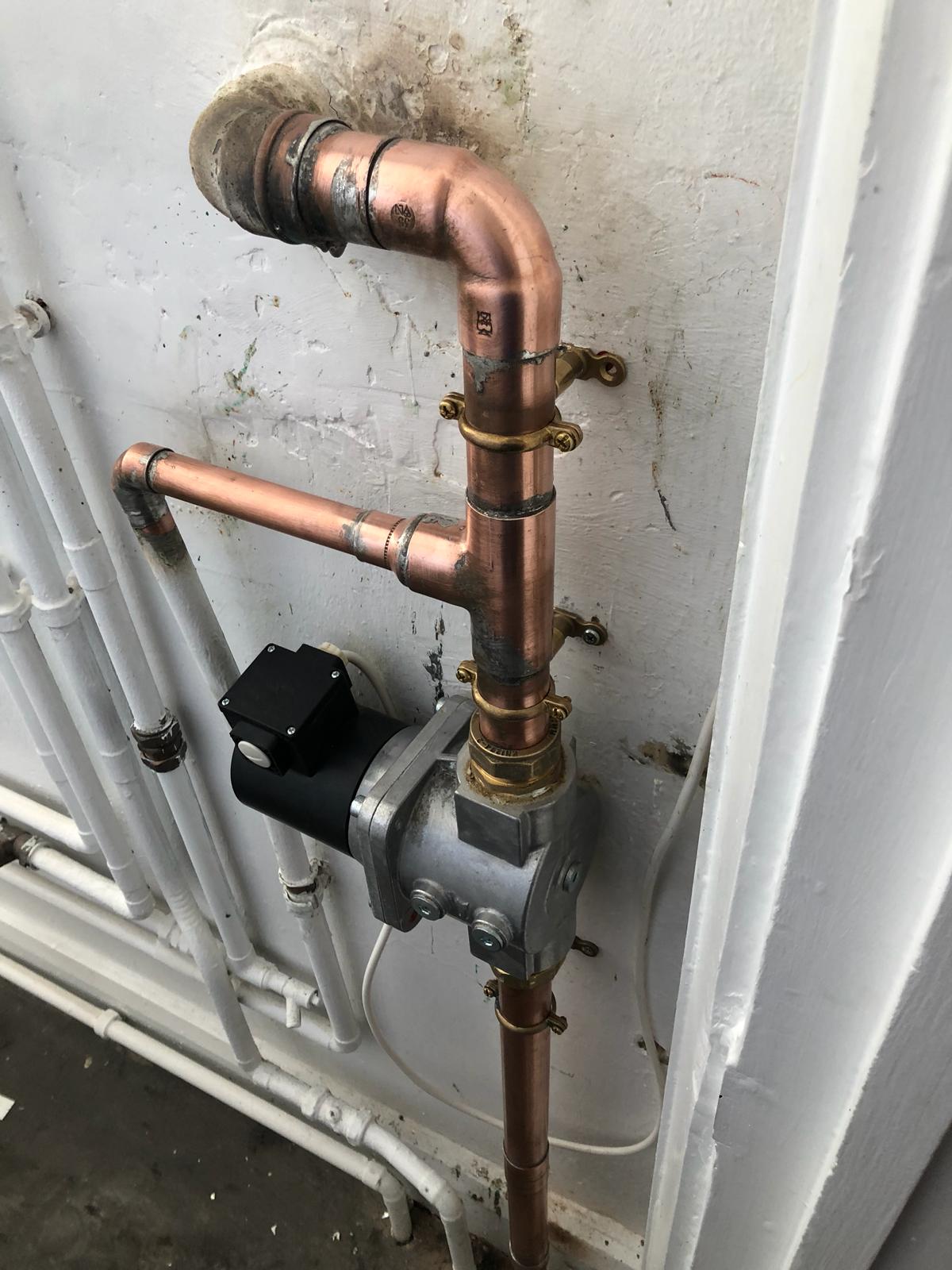
- Install: control panel, sensing devices, emergency stop(s), solenoid valve on the incoming catering gas line
- Commission: prove sequences, record trip times, label points, issue certificate and operator instructions
- Service: annual interlock test, sensor calibration, solenoid tightness test, panel diagnostics review
Fault-finding: interlock not working or keeps tripping
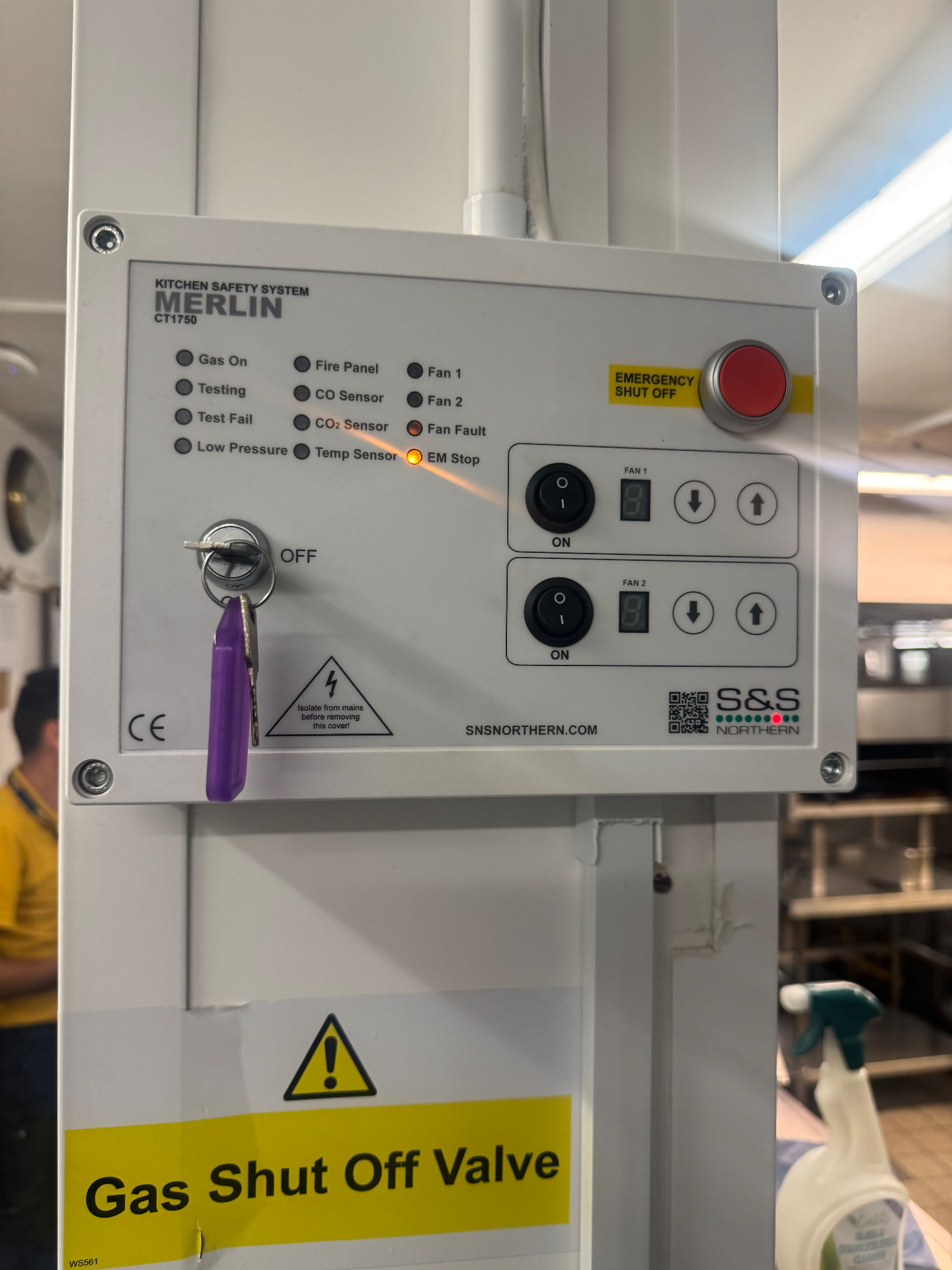
Interlock reset procedure: clear the alarm cause, release the emergency stop by turning the key or twisting the mushroom head, press RESET on the control panel, then press the gas valve reset. If the panel immediately re-alarms, the ventilation is not being proven — stop and call an engineer.
| Symptom | Likely cause | First checks |
|---|---|---|
| Gas interlock not working — no gas at all | Solenoid valve not energising, panel fuse, or failed proving test | Panel indicators, e-stop latched, fan running, valve reset button |
| Gas interlock keeps tripping | Dirty or blocked filters, drifting pressure switch set point, failing fan belt/motor | Clean canopy filters, verify differential pressure, check fan current draw |
| Interlock trips only at peak service | Marginal air pressure differential, doors/windows changing balance | Re-measure differential at full load, recalibrate switch |
| Panel shows proving fail | Downstream appliance isolation valve open or leaking joint | Close all appliance taps, repeat proving, tightness test |
From our engineers' vans
Photos from real jobs — the equipment described on this page, installed and serviced by our engineers.
Frequently asked questions
Is a gas interlock a legal requirement in a commercial kitchen?
Where gas catering appliances are served by mechanical ventilation, BS 6173 requires the ventilation to be interlocked with the gas supply. A Gas Safe engineer will record it as at risk if the interlock is missing or defective.
How often should an interlock be tested?
At least annually as part of the gas safety inspection, with a documented functional test of every sensing device, the emergency stop and the solenoid valve.
Why does my interlock trip when the kitchen gets busy?
Usually a marginal ventilation differential: loaded grease filters, a slipping fan belt or a pressure switch set too close to the running value.
Related guides
Interlock Installation
Supply, fit, commission and certify a new interlock.
Interlock Repair
Not working or tripping? Same-day attendance.
Servicing & Testing
Annual interlock test and certification.
Replacement Systems
Replacement panels, valves and kits in stock.
Installation Cost
What an interlock costs to supply and fit.
Wiring Diagrams
Merlin CT1250, Banico and generic circuits.
Regulations & Law
BS 6173, IGEM/UP/19 and legal duties.
Gas Proving Systems
Pressure proving panels, operating sequences and commissioning.
Gas Solenoid Valves
Normally closed automatic shut-off valves and diagnostics.
Gas Safety Control Panels
Interlock and proving panels, indicators and diagnostic codes.
Sensors & Controls
Air pressure switches, airflow sensors, current monitors, e-stops.
Commercial Kitchen Gas Safety
Ventilation interlock, airflow proving and CP42 compliance.
Manufacturer Guides
Merlin/S&S Northern, Medem, Flamefast, Intelligas, Duomo.
Parts in stock — ready to fit
Held in UK stock and carried on our vans, so most jobs are fixed in one visit.
Replacement gas interlock systems
Merlin, Medem, Intelligas, S&S Northern
In stock today
Air pressure switches
Fan & gas proving pressure switches
In stock today
Gas solenoid valves
Normally closed safety shut-off valves
In stock today
Quick release gas catering hoses
Commercial ranges, bays & mobile catering
In stock today
Super universal thermocouples
Fits most commercial gas appliances
In stock today
Need a part fitted?
Same-day engineer dispatch with these parts on the van.
Gas Safe Registered
Commercial catering & plant
24/7 UK Response
Same-day emergency dispatch
Vetted Engineers
DBS checked for schools & care
Transparent Pricing
Fixed callout, quoted parts