Emergency service
Gas Interlock Repair & Emergency Call-Out
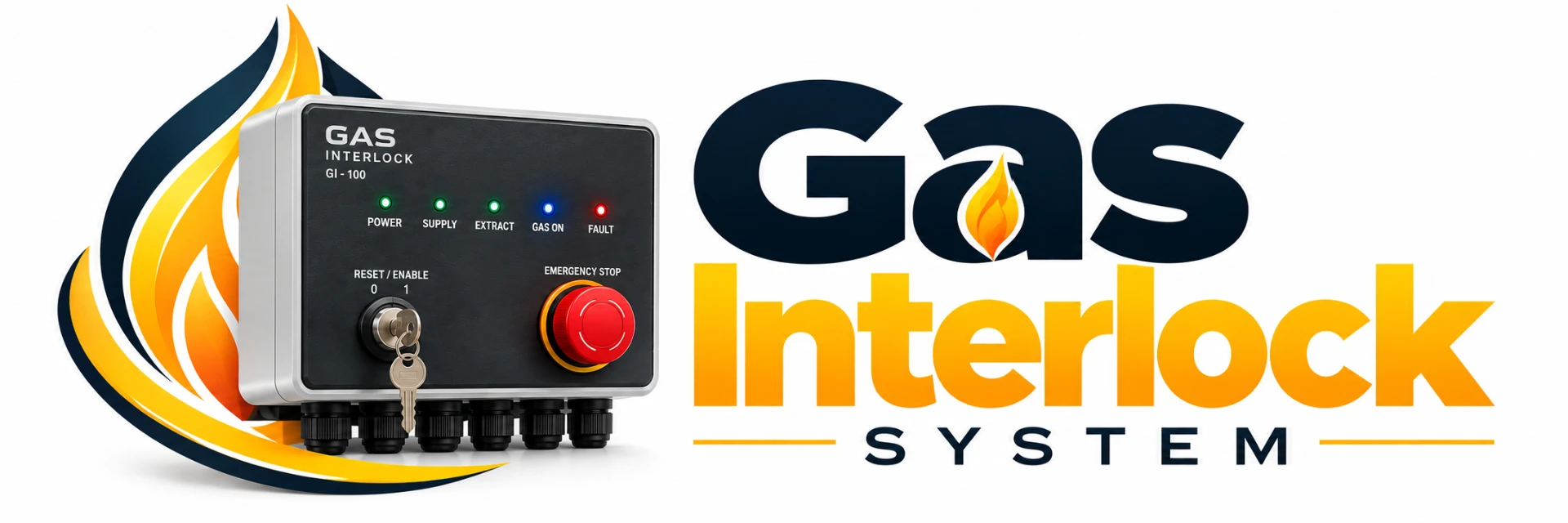
An interlock fault closes your gas and stops service. We diagnose the panel, proving circuit, valve and emergency stop, and carry the common failure parts on the van.
- Same-day attendance for kitchens with no gas
- Air pressure switches, solenoid valves and replacement panels in stock
- Root-cause diagnosis — we never bridge out a safety circuit to get you trading
Quick answer
Most gas interlock faults come from an air pressure switch that no longer proves airflow, a failed gas solenoid valve coil, a blocked sensor tube, a tripped emergency stop or a fan problem. A Gas Safe engineer tests each part in turn, replaces the faulty one from van stock and recommissions the system.
- Common causes
- Pressure switch, solenoid coil, sensor tube, E-stop, fan
- Response
- Same-day emergency call-outs available
- In stock
- Interlock panels, gas solenoid valves, air pressure switches
- How to book
- Call 020 8935 5572 or book online, 24/7
Symptoms we fix
| Symptom | Usual cause |
|---|---|
| No gas at all, panel dead | Supply fuse, isolator switched off, failed panel PSU |
| Interlock keeps tripping mid-service | Blocked filters or slipping belt reducing extract, pressure switch set too tight |
| Won't prove ventilation with fan running | Pressure switch tubing blocked, reversed or split; failed switch; duct sensor fouled with grease |
| Panel healthy but no gas | Solenoid coil failed open circuit, valve stuck closed, valve wired to wrong output |
| Buzzing solenoid valve | Low voltage at the coil, debris in the seat, failing coil |
| Trips on start-up only | Fan run-up time shorter than the proving delay, or e-stop latched |
Before you call out
- Check every emergency stop button is reset — a latched e-stop mimics a system failure
- Confirm the extract fan is actually running and the isolator is on
- Check canopy filters are in place and not blocked
- Note any panel indicator lights or fault codes before resetting
Smell gas?
Do not use the interlock or any electrical switch. Turn off the gas at the emergency control valve, ventilate, evacuate and call the National Gas Emergency Service on 0800 111 999, then call us.
How the work is carried out
Every job starts with a proper look at the site rather than a guess over the phone. The engineer confirms the gas supply size and pressure, the appliances on the line, the ventilation arrangement and the position of the existing or proposed control panel. From that survey the correct solenoid valve size, proving devices and panel are selected, and you get a fixed written quotation before any work begins.
On the day, the gas supply is isolated and the work is carried out by a Gas Safe registered engineer holding the relevant commercial catering qualifications. Pipework alterations are made to current standards, the interlock wiring is installed and labelled, and the whole system is then commissioned: the fans are started, the proving is checked, the emergency stops are tested, and the gas is only released once every safety function works exactly as it should.
You are left with a working system, a demonstration for your staff, and the paperwork — a commissioning record and test certificate that go straight into your gas safety file for insurers, landlords and environmental health.
Parts and equipment we use
We fit proven commercial-grade equipment rather than the cheapest available parts, because an interlock that nuisance-trips or fails early costs a kitchen far more in lost trading than it saves on the invoice. Panels from the established UK manufacturers are all supplied, wired and commissioned by our engineers.
Solenoid valves are normally closed, power-to-open safety shut-off valves sized to the pipework, from 22mm and 28mm on smaller lines up to flanged valves on large range supplies. Airflow proving is matched to the ventilation: differential air pressure switches across the fans, or current sensors where pressure tapping is impractical.
The common failure items — replacement interlock panels, gas solenoid valves, air pressure switches, quick-release catering hoses and universal thermocouples — are carried in stock on the van, which is why most repairs and replacements are completed in a single visit.
Areas we cover
Our engineers cover the whole of London, Surrey and the M25 corridor, including the City and West End, the inner and outer London boroughs, Kingston, Epsom, Guildford, Woking and the Surrey towns, and the Home Counties belt through Watford, St Albans, Slough, Sevenoaks and the Dartford crossing area.
Planned work is booked to suit your trading hours — early mornings, evenings, nights and weekends are all available for kitchens that cannot close during service. Emergency call-outs for kitchens with no gas are attended the same day wherever possible, and out-of-hours access, permits and risk assessments are handled for managed sites and shopping centres.
Frequently asked questions
Why does my gas interlock keep tripping?
Usually because airflow is not being proven consistently: a dirty filter or blocked sensor tube, a pressure switch set too close to the fan's running pressure, a slipping fan belt, or a loose connection. Repeated tripping should be investigated rather than bypassed.
How does a gas interlock system work?
Air pressure switches or current sensors prove the ventilation fans are running. The interlock panel then opens a normally-closed gas solenoid valve. If a fan stops, a sensor fails or the emergency stop is pressed, the panel removes power from the valve and the gas closes.
Can you attend today?
We run a 24/7 UK response desk and prioritise kitchens that are down. Call and we will give you a realistic arrival window.
My interlock trips every lunchtime — is it faulty?
Usually it is genuine: at peak load the extract cannot maintain pressure, often because of blocked filters or a fouled duct. The interlock is doing its job. We measure it and correct the cause.
Is it cheaper to repair or replace?
Sensors, coils, valves and e-stops are worth repairing. Obsolete panels with no spare parts are better replaced with a current equivalent.
Are your engineers Gas Safe registered for commercial catering?
Yes. All gas work is carried out by Gas Safe registered engineers holding the commercial catering categories needed for kitchen appliances, pipework and interlock systems. Registration details are available on request and shown on the engineer's ID card on site.
Can you work outside our opening hours?
Yes. Most of our commercial kitchen work is planned around service — early mornings, evenings, overnight and weekends — so the kitchen stays open when it needs to be. Out-of-hours working is quoted as part of the job, not as a surprise extra.
Related guides
Gas Interlock Systems
The pillar guide: how interlocks work, standards and fault-finding.
Replacement Systems
Replacement panels, valves and complete interlock kits in stock.
Servicing & Testing
Annual interlock testing, certification and planned maintenance.
Wiring Diagrams
Interlock, proving and valve wiring explained.
Gas Solenoid Valves
Normally closed automatic shut-off valves and diagnostics.
Gas Safety Control Panels
Interlock and proving panels, indicators and diagnostic codes.
Parts in stock — ready to fit
Held in UK stock and carried on our vans, so most jobs are fixed in one visit.
Replacement gas interlock systems
Complete panels & kits ready to fit
In stock today
Air pressure switches
Fan & gas proving pressure switches
In stock today
Gas solenoid valves
Normally closed safety shut-off valves
In stock today
Quick release gas catering hoses
Commercial ranges, bays & mobile catering
In stock today
Super universal thermocouples
Fits most commercial gas appliances
In stock today
Need a part fitted?
Same-day engineer dispatch with these parts on the van.
Gas Safe Registered
Commercial catering & plant
24/7 UK Response
Same-day emergency dispatch
Vetted Engineers
DBS checked for schools & care
Transparent Pricing
Fixed callout, quoted parts