Gas interlock system type
Gas Interlock with BMS Interface
A BMS interface lets the interlock report gas on/off, fan faults and alarms to the building management system, so facilities teams can see the kitchen status remotely.
- Remote status reporting
- Fault alerts
- Integration with ventilation control
Quick answer
A BMS interface lets the interlock report gas on/off, fan faults and alarms to the building management system, so facilities teams can see the kitchen status remotely.
- Standards
- BS 6173, IGEM/UP/19, IGEM/UP/11
- In stock
- Interlock panels, gas solenoid valves, air pressure switches
- How to book
- Call 020 8935 5572 or book online, 24/7
System architecture
What is a gas interlock with bms interface?
A BMS interface lets the interlock report gas on/off, fan faults and alarms to the building management system, so facilities teams can see the kitchen status remotely.
How it works
- Volt-free outputs from the panel are wired to BMS inputs.
- Typical signals: gas on, gas off, fault, alarm.
- Some panels accept a BMS input to enable ventilation.
- Signals are tested at commissioning.
Best suited to
- Hospitals, universities and corporate kitchens
- Sites with facilities management teams
- Multi-kitchen buildings
Key features
- Remote status reporting
- Fault alerts
- Integration with ventilation control
- Clear labelling
What we test at commissioning and service
- Each output confirmed at BMS
- Input function tested
- Labels and drawings updated
Supplied, installed and commissioned
Every gas interlock with bms interface we fit is installed by Gas Safe registered commercial catering engineers and commissioned to BS 6173 and IGEM/UP/19. Commissioning includes failing each fan in turn, testing the emergency stop, confirming the gas solenoid valve closes, and recording the results.
You receive a written commissioning record, and the system can be included in your annual CP42 commercial gas safety certificate inspection.
Parts carried in stock
- Replacement gas interlock systems
- Gas solenoid valves in common sizes
- Air pressure switches
- Quick release gas catering hoses
- Super universal thermocouples
Repair, servicing and replacement
If your system stops resetting, keeps tripping or the gas will not come on, our engineers diagnose the fault on site. Most faults are a fan proving problem, a failed valve coil, an open emergency stop circuit or wiring disturbed during other work.
Annual servicing tests every safety function and is usually combined with the CP42 inspection to minimise disruption.
Regulations
BS 6173 requires gas supplies to commercial catering appliances to be interlocked with mechanical ventilation so appliances cannot operate without it. IGEM/UP/19 covers the design and application of interlock devices and CO₂ monitoring. The Gas Safety (Installation and Use) Regulations 1998 require installations to be maintained in a safe condition.
Compare gas interlock system types
| Type | Summary |
|---|---|
| Current Sensing Gas Interlock | Proves supply and extract fans by monitoring the electrical current they draw. |
| Air Pressure Switch Gas Interlock | Uses differential air pressure switches on the ductwork to prove the fans are moving air. |
| Airflow Sensing Gas Interlock | Directly proves air flowing through the ventilation system with an airflow sensor. |
| 2-Fan Gas Interlock | Monitors one supply (make-up air) fan and one extract fan — the most common kitchen set-up. |
| 4-Fan / Multi-Fan Gas Interlock | For larger kitchens with several supply and extract fans or multiple canopies. |
| Gas Interlock with Gas Pressure Proving | Ventilation interlock plus a downstream gas tightness check before gas is allowed on. |
| Gas Interlock with CO₂ Monitoring | Monitors kitchen CO₂ and can isolate gas when levels reach set limits. |
| Gas Interlock with CO / Gas Detection | Adds carbon monoxide, natural gas (methane) or LPG detection to the interlock. |
| Gas Interlock with Fire Alarm Interface | Isolates the kitchen gas automatically when the building fire alarm activates. |
| Gas Interlock with BMS Interface | Sends status and fault signals from the interlock to a building management system. |
| Demand-Controlled Ventilation Gas Interlock | Integrates gas safety with variable fan speed and demand-controlled ventilation. |
| Intelligent / Digital Gas Interlock | Display-based panels with diagnostics, configurable inputs, alarms and event logs. |
| Boiler Room Gas Interlock & Proving System | Designed around plant-room and boiler-house gas safety rather than catering. |
| Laboratory Gas Interlock & Proving System | Gas proving and interlocking for school and college laboratory gas services. |
From our engineers' vans
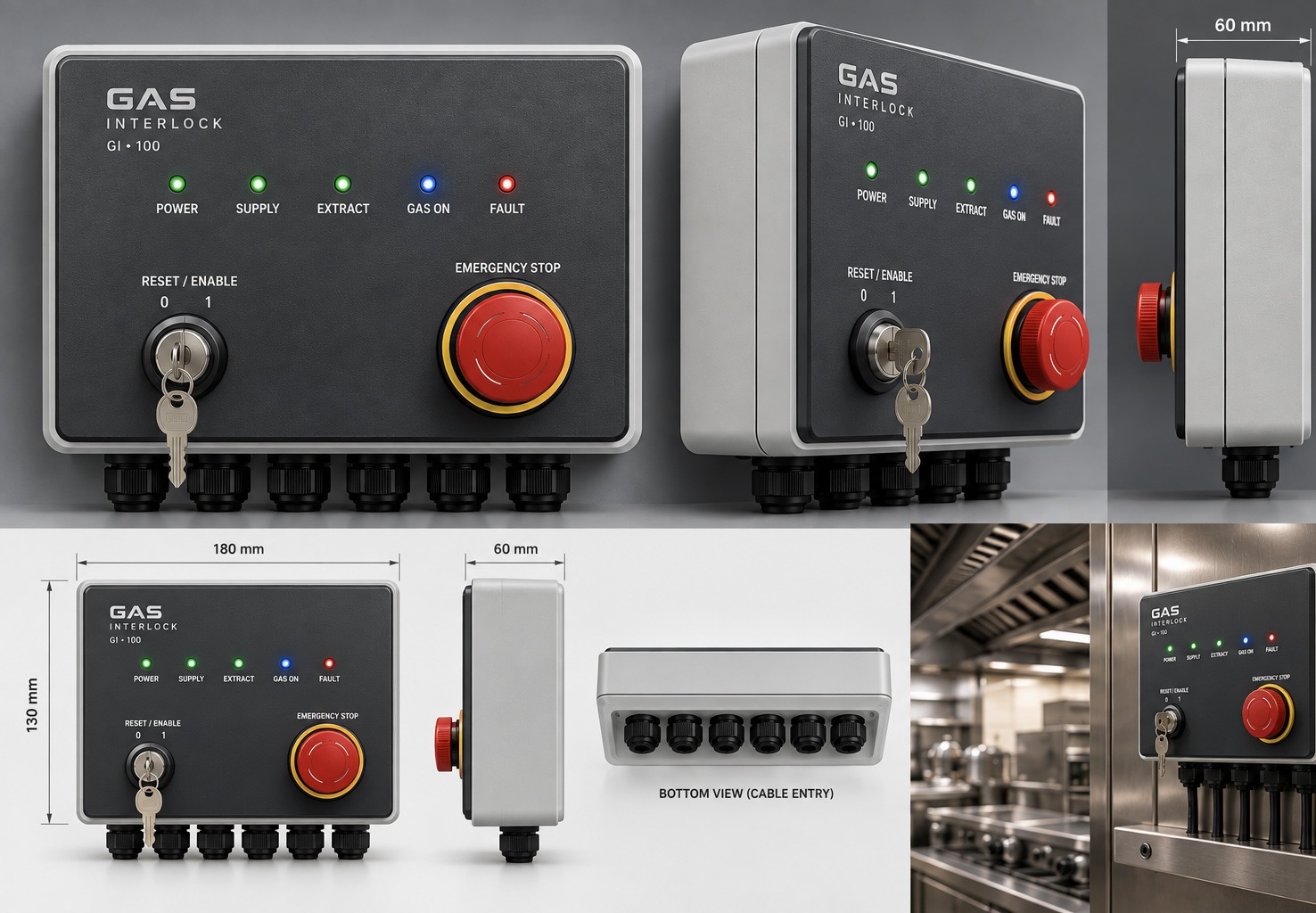
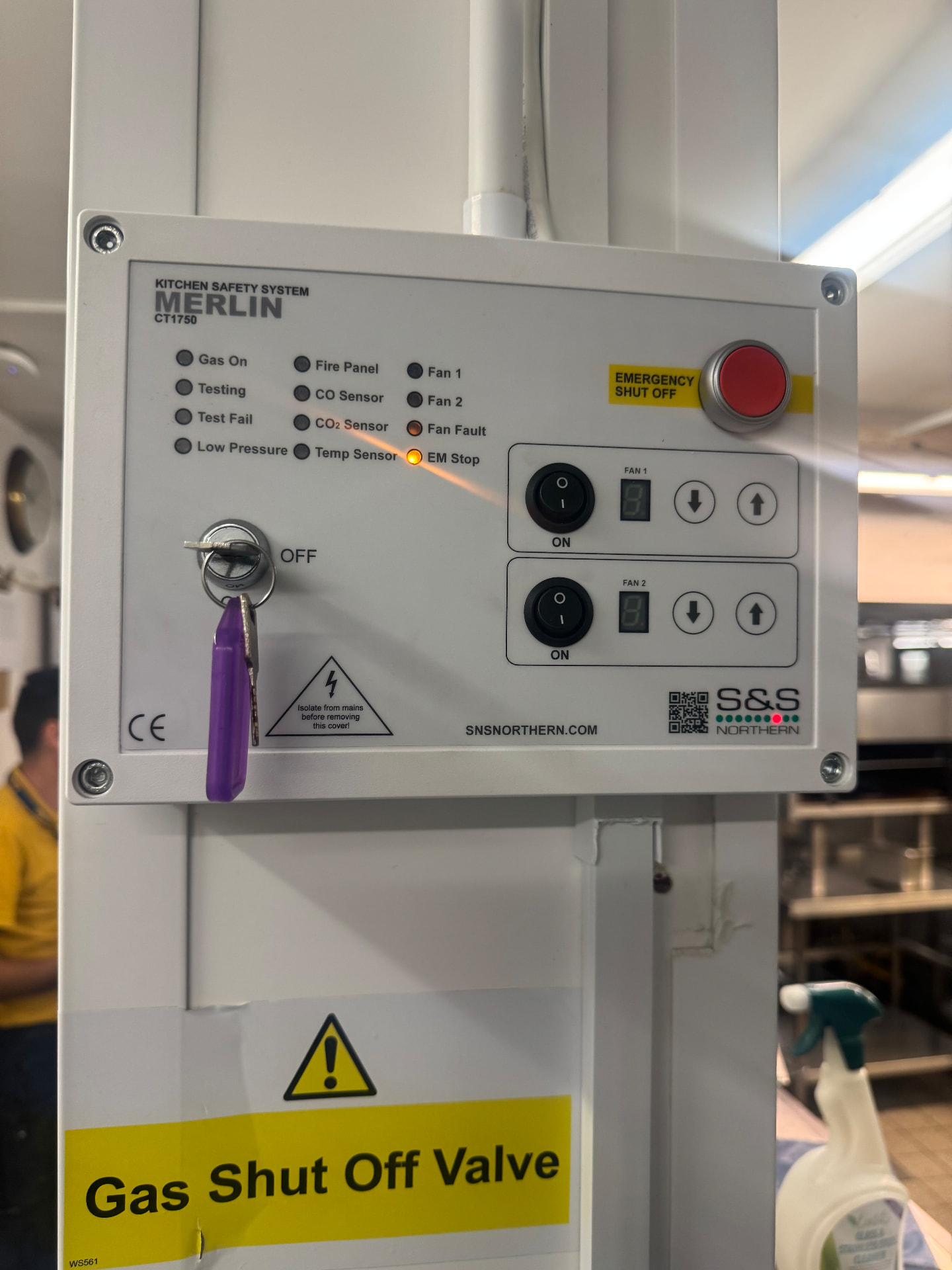
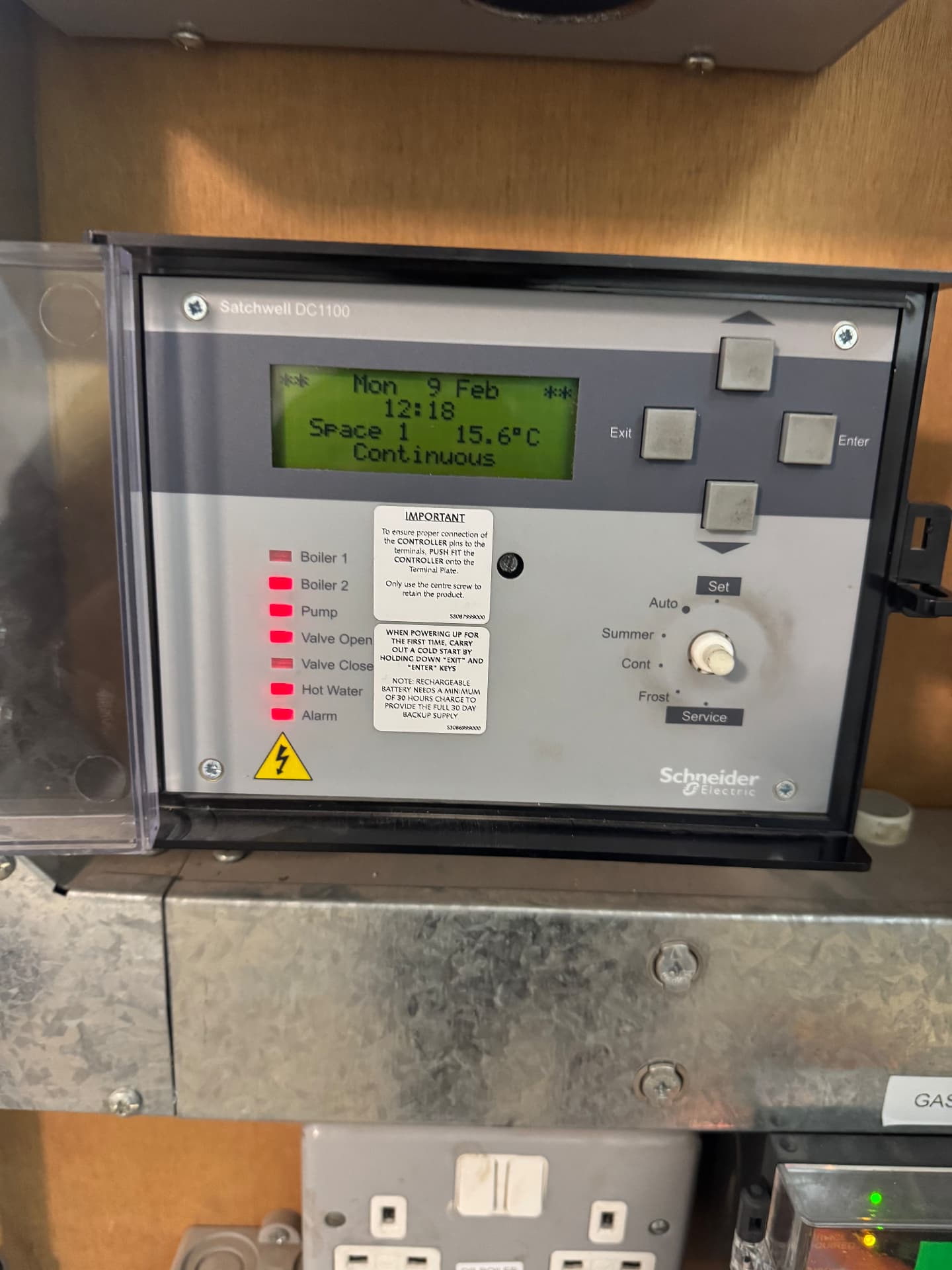
Photos from real jobs — the equipment described on this page, installed and serviced by our engineers.
Frequently asked questions
Can the BMS turn the gas on?
No — gas restoration should always be a local manual reset. The BMS receives status and can control the fans.
Can you add a BMS interface to an existing panel?
Often yes, if the panel has outputs; otherwise an upgrade may be needed.
Related guides
Parts in stock — ready to fit
Held in UK stock and carried on our vans, so most jobs are fixed in one visit.
Replacement gas interlock systems
Complete panels & kits ready to fit
In stock today
Air pressure switches
Fan & gas proving pressure switches
In stock today
Gas solenoid valves
Normally closed safety shut-off valves
In stock today
Quick release gas catering hoses
Commercial ranges, bays & mobile catering
In stock today
Super universal thermocouples
Fits most commercial gas appliances
In stock today
Need a part fitted?
Same-day engineer dispatch with these parts on the van.
Gas Safe Registered
Commercial catering & plant
24/7 UK Response
Same-day emergency dispatch
Vetted Engineers
DBS checked for schools & care
Transparent Pricing
Fixed callout, quoted parts